
by Chris Servello
***Commentary delivered on the November 21, ’26 CavasShips Podcast***
Remember the children’s book Alexander and the Terrible, Horrible, No Good, Very Bad Day?
Well, Tuesday was a no good, very bad day for the United States Navy.
Not because another ship broke down, a shipbuilding program slipped, or a maintenance availability ran long.
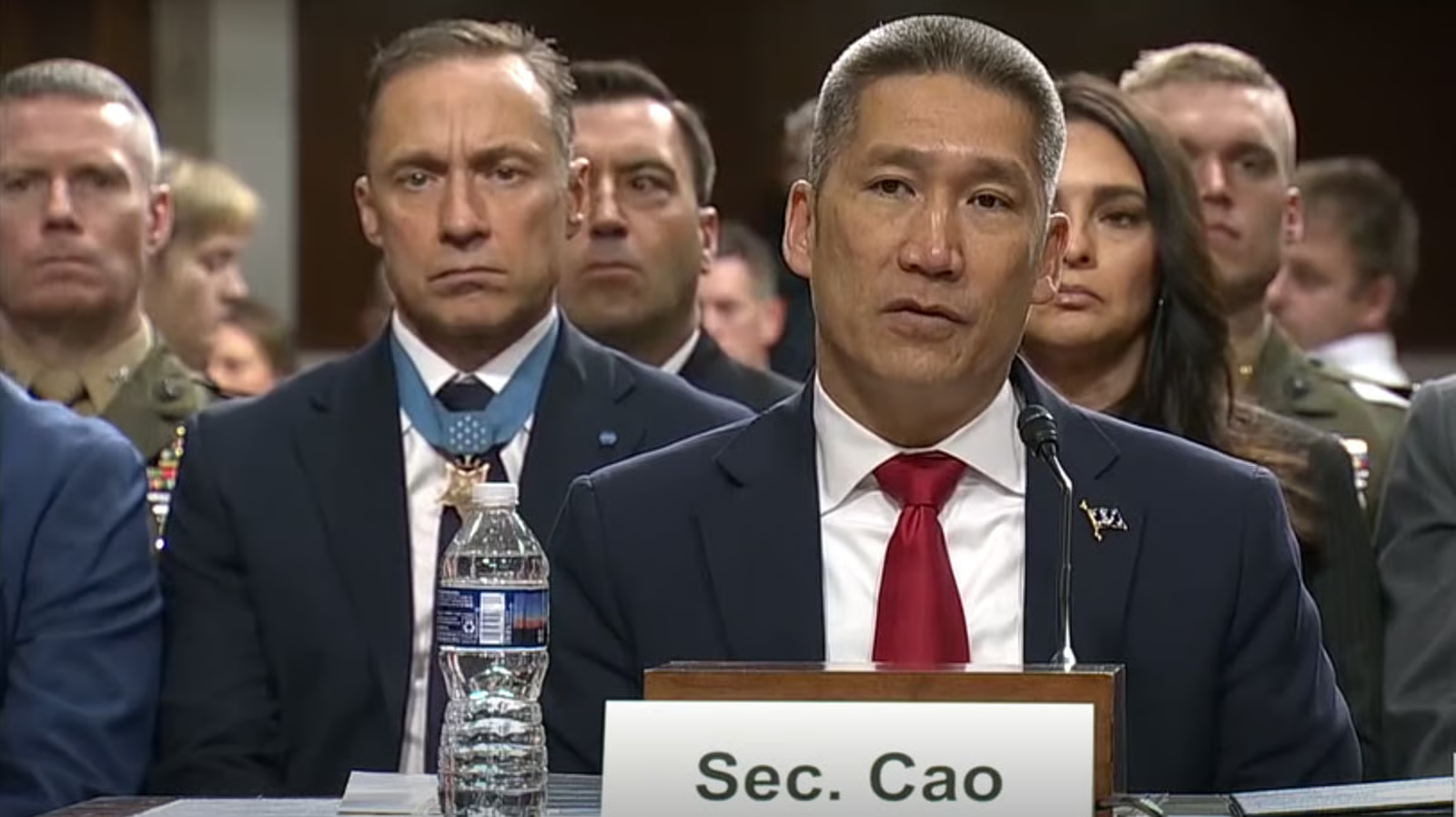
No, Tuesday was supposed to be an opportunity for the Senate Armed Services Committee to seriously examine the future of the Navy during Hung Cao’s confirmation hearing to be Secretary of the Navy.
Instead, we got far too much political theater.
Finger-pointing. Assigning blame. Scoring political points. And not nearly enough discussion about how we’re going to fix the very real problems facing our Navy and the American maritime enterprise.
Now, to be fair, there were legitimate questions about the war with Iran and how the Trump administration has managed military operations.
Questions about the cost of the war, the strain on our ships and sailors, depleted weapons inventories, and whether our focus on the Middle East is coming at the expense of readiness in the Pacific.
Those are absolutely fair questions. So are concerns about the administration’s transparency with Congress and whether lawmakers have been given the information they need to exercise meaningful oversight.
And Hung Cao, as the acting Secretary and the nominee for the permanent job, has an obligation to answer those questions. Some of his answers Tuesday deserved further scrutiny.
But there’s a difference between serious oversight and using a confirmation hearing to settle political scores.
The Senate has every right to challenge the administration’s decisions about Iran. It also has a responsibility to examine what those operations have taught us and what the Navy needs to do differently.
Because regardless of whether you support or oppose the war, our sailors are fighting it. Our ships are being worn down by it. Our weapons inventories are being consumed by it. And our maintenance and logistics systems are being tested in ways we haven’t seen in decades.
Those are issues that ought to bring Republicans and Democrats together, not drive them further apart.
And let’s not pretend the Navy’s problems began with this administration.
Republican and Democratic administrations alike have struggled with shipbuilding, acquisition reform, fleet readiness, and the decline of America’s maritime industrial capacity.
Congress has contributed to those problems as well.
There’s plenty of blame to go around.
But blame isn’t a strategy. And political theater doesn’t build ships, replenish missile inventories, or get sailors home to their families.
What I wanted to hear Tuesday was a serious discussion about how we take the lessons of the Iran war and turn them into a stronger Navy.
How do we rebuild our weapons inventories? How do we improve contested logistics? How do we sustain a fleet that’s being asked to do more than its size and maintenance capacity can reasonably support?
How do we restore confidence in our shipbuilding programs? And how do we give industry the predictable demand and competent government partnership it needs to deliver?
Those questions deserve more than a few minutes squeezed between partisan exchanges.
And none of this gives Hung Cao a pass. If confirmed, he will have to demonstrate that he can lead, make tough decisions, challenge the status quo, and work effectively with Congress, including those who disagree with the administration.
That’s the job.
What troubles me most about Tuesday is that the political fight too often seemed more important than the institution everyone in that room is supposed to serve.
Our sailors don’t get to choose which administration sends them into harm’s way. Our shipbuilders don’t get to stop working because Washington can’t agree on who’s to blame.
They deserve serious leadership and serious oversight.
So yes, Tuesday was a no good, very bad day for the Navy.
But it doesn’t have to define what comes next.
Let’s get a Secretary confirmed, demand accountability from both the administration and Congress, and get back to the business of building and sustaining the Navy this country needs.
Because unlike Alexander in that children’s book, the United States Navy can’t just move to Australia when it’s having a bad day.
And given what’s happening in the Indo-Pacific, Australia probably wouldn’t be much of an escape anyway.
Chris Servello is co-founder of Provision Advisors and co-host of the CavasShips podcast. He writes frequently about naval readiness, maritime strategy and the defense industrial base.