

By Chris Servello
The Trump administration is clearly interested in using foreign shipyards to help grow the U.S. Navy. Given the condition of our shipbuilding industrial base and the urgency of expanding the fleet, it’s not hard to understand why. Our allies have capacity, expertise, and production methods worth studying.
But I’m still skeptical that building American warships overseas is the right answer. My concern goes beyond the potential impact on American shipyards and workers. I’m just not convinced the Navy is prepared to manage these arrangements successfully.
For years, the Navy has struggled to be a consistent customer. Requirements change, designs aren’t always mature when construction begins, and decisions take too long. These problems have contributed to the cost overruns and schedule delays now being used to justify looking overseas.
If the Navy has trouble managing ship construction in Virginia, Mississippi, Maine or Wisconsin, why should we expect better results in South Korea or Japan?
Foreign shipyards may offer efficiencies worth adopting, but changing where a ship is built doesn’t fix how the Navy buys it.
The administration has now made its intentions clear. An August White House memorandum authorizes a version of the Finland model for selected ship classes, allowing initial overseas construction while requiring foreign partners to establish or acquire American shipyard capacity and transition subsequent production to the United States.
That is an important commitment. But policy language alone won’t persuade Congress. Foreign companies hoping to participate need to demonstrate how they intend to deliver on it.
And with Acting Secretary of the Navy Hung Cao scheduled to appear before the Senate Armed Services Committee on November 17, the time to make that case is now.
The Finland Model Needs an American Address
The White House’s approach draws on the Coast Guard’s icebreaker cooperation with Finland, where foreign expertise and initial production are intended to accelerate deliveries while expanding American industrial capacity.
The administration’s memorandum goes further than simply encouraging investment. It requires participating foreign suppliers to establish or acquire a controlling interest in an American shipyard, train American workers, license shipbuilding technology, develop domestic supply chains, and build subsequent ships in the United States after the first two.
Those are meaningful conditions. The question is how they will be implemented and enforced.
Which American yards will benefit? How much capital is actually committed? What jobs and supplier opportunities will be created? When will facilities be ready? And what happens if a foreign partner fails to deliver?
Congress should have those answers before being asked to support overseas construction.
Hanwha Offers a Useful Example
South Korea’s Hanwha deserves credit for taking meaningful steps in this direction.
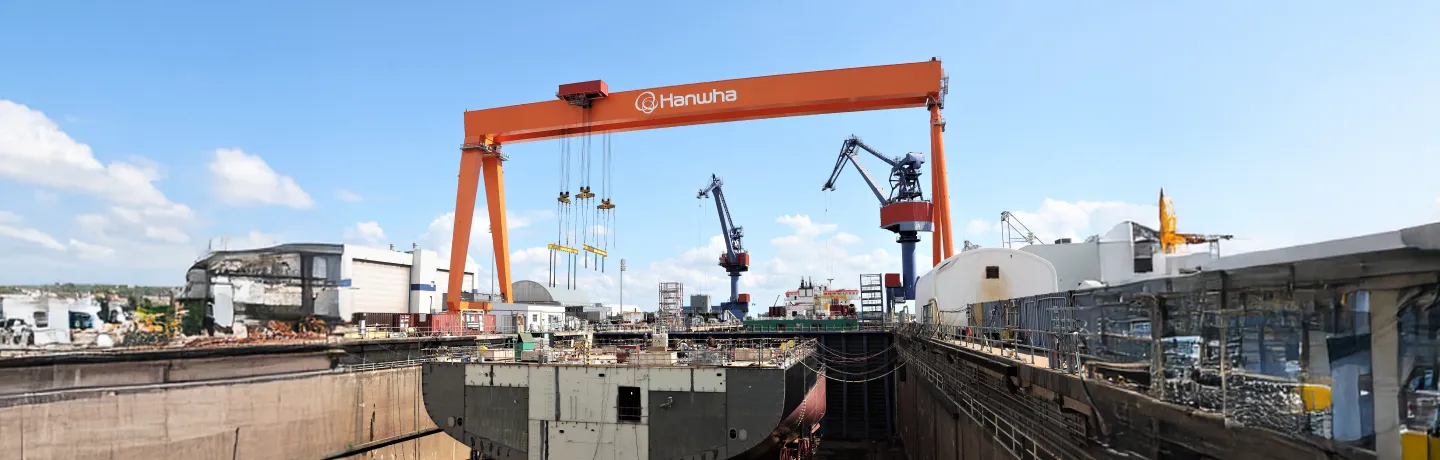
Its 2024 purchase of Philly Shipyard established an American industrial presence. Hanwha subsequently announced plans to invest $5 billion in expanding and modernizing the facility, including new infrastructure, advanced manufacturing capabilities, and workforce development.
More recently, Hanwha announced that its U.S. defense subsidiary would assume control of the Philadelphia operation—positioning the yard for both commercial and Navy work.
That organizational change matters. It suggests Hanwha is moving on its pledge to establish an American defense shipbuilding business. Much of the promised investment still needs to be delivered, but the direction is encouraging.
Hanwha is also pursuing Austal USA, whose Mobile, Alabama, operations support important Navy, Coast Guard, and submarine industrial base programs.
That proposed acquisition has become more interesting since the original announcement. Hanwha’s negotiations have advanced, but American investment firm Wildcat Infrastructure has submitted a competing proposal with a higher indicative valuation. No transaction has been completed.
The competition raises legitimate questions about ownership, national security, and the future of an important American shipbuilder. But it also demonstrates that established U.S. shipbuilding capacity is attracting serious investment interest.
Hanwha hasn’t earned a free pass. Any acquisition deserves careful scrutiny. But the company is offering something other foreign shipbuilders should be expected to provide—a tangible strategy for expanding its American industrial presence.
Give American Shipbuilders Some Credit
There’s another thing foreign shipbuilders could do that wouldn’t cost them anything—publicly acknowledge the value of American shipbuilders.
Too much of the current debate has become an exercise in talking down the domestic industry. Comparisons with foreign yards often suggest that American companies and workers simply can’t compete.
That’s an incomplete account of how we got here.
American shipbuilders have largely built the fleet their customer asked them to build, under the requirements, funding profiles, and production schedules that customer established.
The Navy decides what ships it wants, how many it will buy, and when it will buy them. Industry has spent decades responding to inconsistent demand, shifting priorities, and unpredictable budgets.
That doesn’t absolve shipbuilders of responsibility for poor performance. There are real problems in American yards that industry needs to own and fix. But government decisions have played a significant role in creating today’s challenges.
And consider what American shipbuilders continue to produce: nuclear-powered aircraft carriers and submarines, sophisticated surface combatants, amphibious ships, and some of the most demanding maintenance and modernization work in the world.
That’s an extraordinary industrial capability.
Foreign companies hoping to enter this market would do themselves a favor by publicly recognizing those achievements and explaining how their expertise can complement American capabilities.
Navy and administration leaders should be making the same point. We aren’t going to rebuild confidence in American shipbuilding by constantly diminishing the people and companies doing the work.
The Navy Has Work to Do, Too
The Navy also owes Congress a credible explanation of how it intends to manage overseas construction.
Building warships abroad introduces complications involving security requirements, technology transfer, international supply chains, quality assurance, and configuration management. Each creates additional demands on an acquisition system already under considerable strain.
The White House has recognized part of this problem by calling for tighter design discipline, including senior-level approval of changes to foreign-derived parent designs.
That’s a useful step, but execution will matter more than another directive.
Who will oversee construction? How will the Navy maintain configuration control? What happens when requirements change or problems emerge during production? And how will it ensure foreign construction doesn’t create new sustainment challenges once ships enter service?
These aren’t reasons to reject every overseas proposal. They’re reasons to insist on a serious management plan before committing taxpayer dollars.
Foreign shipyards cannot solve problems that originate with their customer.
Cao’s Hearing Could Set the Tone
My biggest concern is that overseas warship construction becomes the issue that ties up the entire naval shipbuilding agenda.
That possibility is becoming more immediate.
Cao’s November 17 confirmation hearing arrives as Congress returns for its post-election session and faces difficult decisions on defense spending and the FY 27 agenda.
Senators will have an opportunity to question the administration’s shipbuilding plans, their implications for American workers, and the Navy’s ability to manage overseas production.
Cao should welcome that discussion. He has an opportunity to make a compelling case for growing the fleet and strengthening American shipbuilding. But foreign partners need to help him make it.
Imagine the difference between Cao appearing before Congress with general assurances that overseas construction will eventually benefit American industry and appearing with funded investment commitments from companies prepared to put their own capital at risk.
The latter gives senators something concrete to evaluate.
Without that evidence, the hearing will become an argument over sending American jobs overseas rather than a discussion about expanding naval capacity.
That would be unfortunate. Congress and the administration have substantial common ground on growing the fleet, improving maintenance, expanding shipyard capacity, strengthening suppliers, and reforming acquisition.
Those priorities shouldn’t become casualties of a fight over where the first few ships are built.
Show Congress the Money—and the Plan
Foreign shipbuilders should immediately put credible American investment proposals before the administration, Navy leadership, and Congress. Identify the facilities, capital commitments, workforce plans, domestic suppliers, and timelines. Where possible, begin investing before receiving major American warship contracts.
The administration has established the broad conditions. Now it needs to demonstrate how those conditions will be enforced, and the Navy must show it can manage these partnerships without repeating its domestic acquisition mistakes.
None of this eliminates my concerns about overseas warship construction. Nor does foreign investment automatically justify changing longstanding restrictions on where American warships can be built.
But it would give Congress a stronger basis for considering the administration’s approach without sacrificing progress on the broader naval agenda.
The measure of success shouldn’t simply be how many American warships come out of foreign yards. It should be whether the United States ends up better able to build, maintain, repair, and sustain its own fleet.
Hanwha has begun showing what meaningful investment might look like. Others should follow its lead.
Foreign shipbuilders want a place in America’s naval future. They need to show Congress what they’re willing to build in America to earn it. And the Navy needs to prove it can be the customer those investments deserve.
Chris Servello is co-founder of Provision Advisors and co-host of the CavasShips podcast–he writes frequently about naval readiness, maritime strategy and the defense industrial base.

